As drought conditions persist and summer temperatures rise, watering becomes one of the most important factors in maintaining a healthy commercial landscape.
 By Michael Moody, Branch Manager
While irrigation systems provide automated water delivery, many properties either do not have irrigation or have limited coverage. In these situations, proactive watering plans are essential to protect valuable landscape assets and avoid costly plant replacement.
Trees, shrubs, seasonal flowers, and newly installed plant material are particularly vulnerable to heat and drought stress. Without adequate moisture, plants can experience leaf scorch, premature leaf drop, stunted growth, and even permanent damage. Once signs of stress become visible, recovery can be difficult, making preventative watering critical.
For properties without irrigation, water truck service is often the most effective solution. Water trucks can provide deep, thorough watering to landscape beds, trees, and shrubs on a scheduled basis. Unlike brief surface watering, deep watering allows moisture to penetrate the root zone where plants need it most. Regular water truck visits can help landscapes survive extended periods of hot, dry weather and maintain their appearance throughout the summer. In many cases, water-soluble fertilizers can also be applied during watering services to provide essential nutrients, encourage healthy root and shoot development, and maximize the overall growth and visual impact of the landscape.
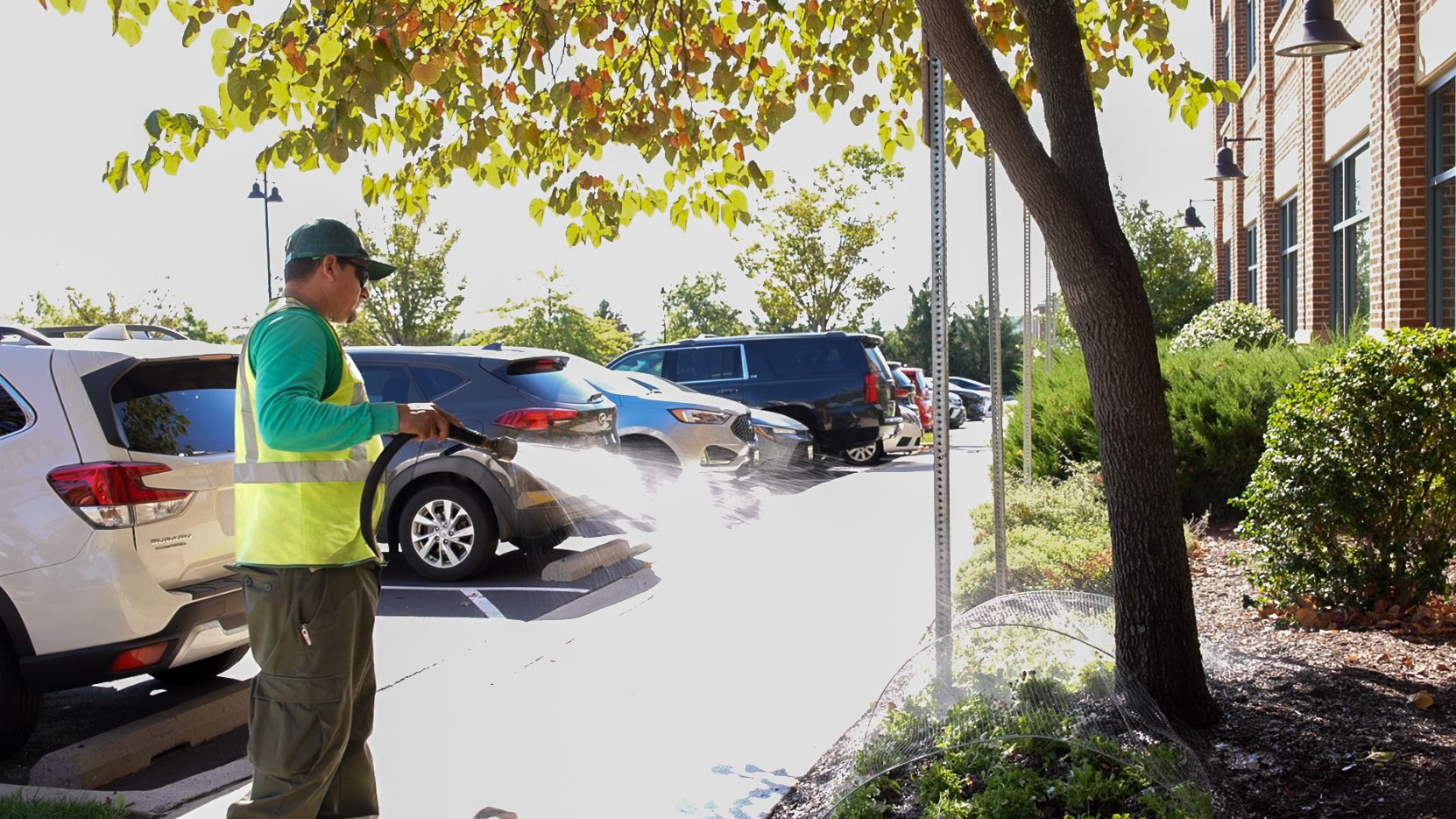
Hand watering is another valuable option, particularly for targeted areas that require extra attention. Newly planted trees and shrubs, seasonal color displays, and high-visibility entrance features often benefit from supplemental hand watering. This approach allows landscape professionals to evaluate plant health while ensuring water is delivered precisely where it is needed. Hand watering can also help address localized dry spots that may not receive adequate rainfall.
Many property owners also have on-site maintenance teams that can assist with landscape watering. Providing proper training and guidance ensures watering efforts are effective rather than wasteful. Team members can learn how much water different plant materials require, how often watering should occur, and how to identify signs of drought stress before damage becomes severe. A simple watering plan and routine inspections can significantly improve plant survival during challenging weather conditions.
The key to successful watering is consistency. Waiting until plants show signs of decline often results in increased stress and recovery costs. Developing a proactive watering strategy—whether through water truck service, hand watering, trained on-site staff, or a combination of these methods—helps preserve the health, appearance, and long-term value of a commercial landscape.
As summer approaches, now is the time to evaluate your property’s watering needs and implement a plan that will keep your landscape thriving through the hottest months of the year.