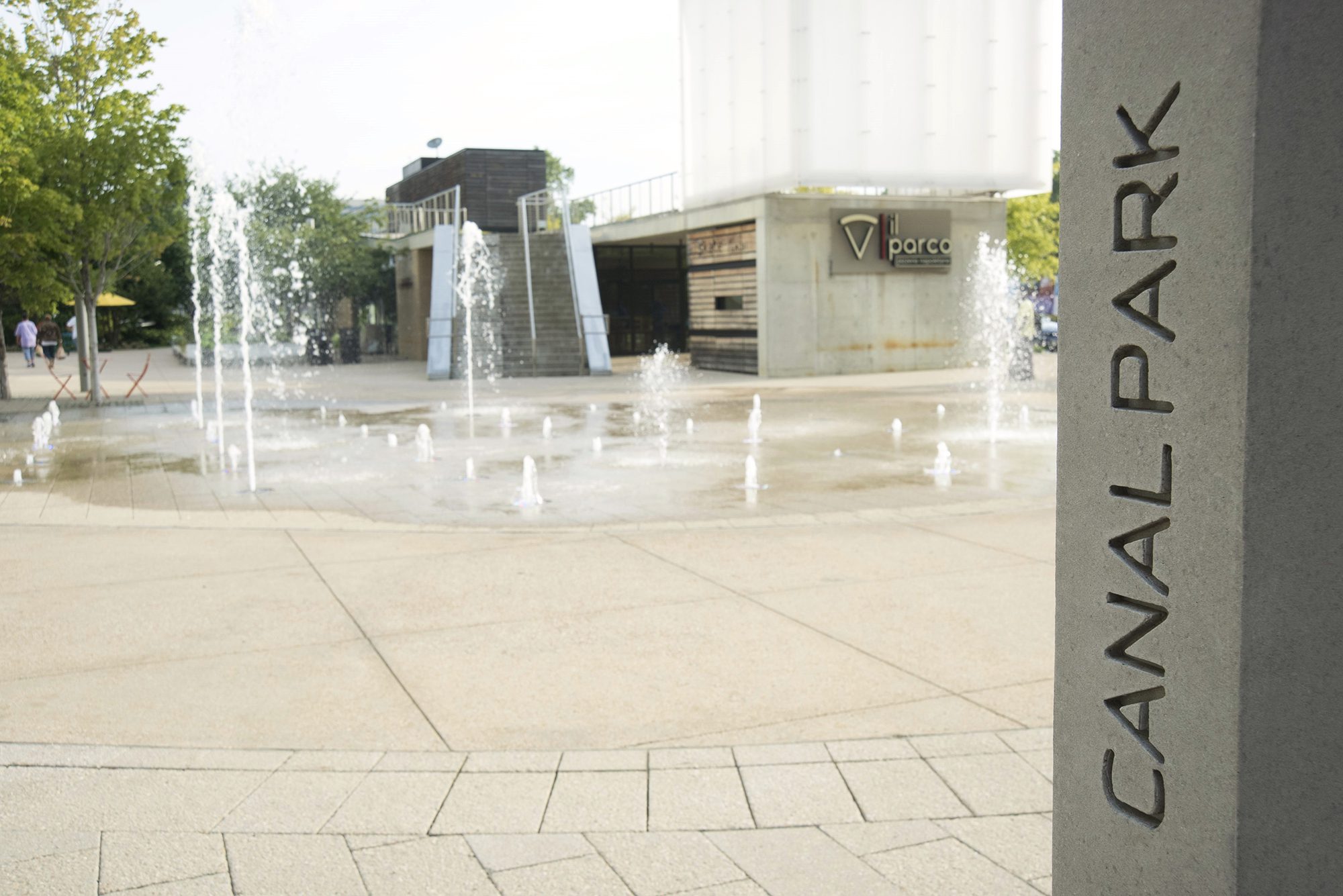
Project Name: Canal Park
Location: Washington, D.C.
Website: www.capitolriverfront.org/canal-park
Project Scope: Organic turf maintenance, greywater irrigation system maintenance, perennial and tree installation and maintenance, and maintenance of several sustainable systems including a rain garden, bioretention planters, green roof and living wall.
Date Project Maintenance Began: January 2013
Ruppert Branch: Forestville, MD Landscape Management Branch
Ruppert Team Members who Worked on the Project: Matthew Davidson (branch manager), Bernard Botchway (area manager), Wayne Taylor (area manager), Patty Steadman (field manager), Ernesto Sanchez, Euginio Garcia, and Donald Jefferson (crewmen).
Industry Awards Won: National Association of Landscape Professionals (NALP) 2016 Grand Award, Landscape Contractors Association (LCA) 2016 Grand Award
Site Description: Canal Park is one of the first parks built as part of the District’s Anacostia Waterfront Initiative, is LEED certified and is a three star certified pilot project for the Sustainable Sites Initiative. The park is intended to be a model for sustainability, a social gathering place and an economic trigger for the surrounding neighborhood. Located on the site of a former parking lot for district school buses, this three-block-long park is sited along the historic former Washington Canal system. Inspired by the site’s waterfront heritage, the design evokes the history of the space with a linear rain garden and three pavilions reminiscent of floating barges that were once a common sight along the canal.
There are a number of sustainable design strategies incorporated into Canal Park including an extensive storm water collection and reuse system, which includes a linear rain garden, Low Impact Design tree pits, a street infrastructure that allows surrounding buildings to send rainwater into the system, and approximately 80,000 gallons of underground cistern capacity. Additional sustainable site amenities include geothermal heating and cooling of the pavilion, vegetated green roof, energy/water monitoring dashboard systems, electric car charging stations and bicycle parking racks. Other site features designed to encourage use include art and sculpture, an ice skating rink in winter, a café, water fountains and lawn areas. Spaces within the park are used for a variety of programs, events and celebrations—all of which work in concert to create a park that balances sustainability and community use and economic growth.
The park tavern provides a convenient watering hole for local businesses. Crews finish working before lunchtime so as not to disturb restaurant patrons. Two-cycle battery powered equipment is used to help reduce noise, which adds to the sustainable nature of this site.